

The advent of sequencing technologies, such as Nanopore (ONT), has opened up new possibilities for fast and efficient microbial detection. Our company is dedicated to advancing the field of clinical and agricultural diagnostics by developing innovative assays for fungal profiling.
Fungal infections are a rising concern in the field of medicine and agriculture
Fungi are a significant component of the host microbiota and play a crucial role in disease development. Diagnosing fungal infections is challenging due to the abundance of fungal species in complex microbial communities. Moreover, microbiota analysis tools have been mainly developed for bacteria (e.g., targeting the 16S rRNA gene) and they often fall short if applied to fungal marker-gene-based investigations (i.e., full-length ribosomal operon including ITS regions).
Our aim is to enable rapid, accurate, and cost-effective diagnostics assays for high-throughput sequencing technologies. We use novel primers for specimen preparation for Nanopore sequencing and bioinformatics tools to improve the sensitivity and specificity of our assays. Current research is focused on grapevine mycobiota, including Botrytis cinerea, Alternaria Alternate, and Saccharoses (LC750323.1, LC749799.1, LC749799.1, LC743580.1). We use full-length ribosomal operon (5800 bp) to generate valuable insights into diagnosing these fungal infections. Our research is ongoing, and with our partner New England Biolabs (NEB), we plan to broaden our portfolio to include other pathogens from plants, humans, and animals.
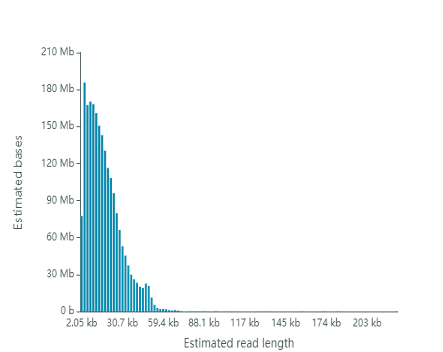 | 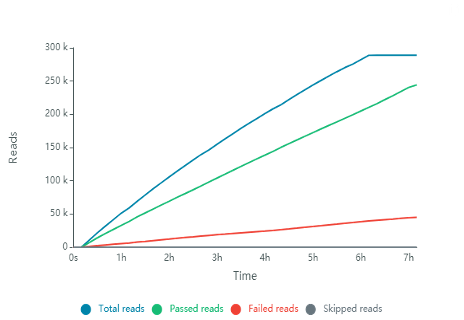 |
| Fig 1. Results of Read Length Histogram of Estimated Bases | Fig 2. Results of cumulative output reads |
The importance of diagnostics of fungal infections cannot be overstated. Many hurdles still need to be solved, and standards are waiting to be defined. However, our research could advance the high-throughput disease diagnostics field significantly.


